EXPOSED: The Hidden Religion Behind Social and Emotional Learning (SEL)
A multi-billion-dollar industry is bringing religious practices into public schools at taxpayer expense.
Imagine a meditation program designed with the advice of Christian pastors from the Billy Graham Training Center. Would it be welcomed in public schools? Almost certainly not. Yet programs inspired by the Dalai Lama mold students’ minds under the guise of social and emotional learning (SEL) curriculum in classrooms across the country.
The Bible served as the foundational text for American education, influencing and shaping the curriculum taught in schools. That changed in 1963 when the U.S. Supreme Court ruled that mandatory Bible reading and recitation of the Lord’s Prayer in public education violated the First Amendment.
While Christianity has been pushed out of government schools, school districts have welcomed Eastern religions. Buddhist- and Hindu-aligned SEL programs have crept into nearly every district across the nation with little scrutiny or opposition.
The removal of God from public schools left a spiritual void. As mental health issues skyrocketed, education officials increasingly turned to alternative approaches to address students’ emotional and psychological needs. Districts across the country have now embraced Eastern religious traditions in place of the Christian principles that had long influenced American education.
Valid arguments can be made against the government’s involvement in religion. After all, our nation’s founders left their homeland over religious persecution and created the First Amendment to prohibit a state-sponsored religion. But now the state is adopting other religious teachings, including Buddhism, Hinduism, and Secularism. The U.S. Constitution also protects the “free exercise” of one’s religion, but Christianity is being undermined in the classroom.
What is Social and Emotional Learning
One of the groups that developed SEL in 1994 is the Buddhist-aligned Collaborative for Academic, Social, and Emotional Learning, or CASEL. The group reported in 2024 that more than 80 percent of American school districts used SEL curriculum.
CASEL admits that “SEL can be hard to sum up because it is connected to many practices, environments, and mindsets.” The group attempts to define SEL as a process through which people “acquire and apply knowledge, skills, and attitudes” to:
- Develop healthy identities.
- Manage emotions and achieve personal and collective goals.
- Feel and show empathy for others.
- Establish and maintain supportive relationships.
- Make responsible and caring decisions.
These are worthy attributes, but the underlying spiritual process that’s taught to achieve these skills concerns Christians.
SEL’s Ties to Eastern Religions
CASEL’s executive summary calls SEL “an integral part of education and human development.” CASEL Co-founder Daniel Goleman’s Buddhist ties and close relationship with the Dalai Lama, the spiritual leader of Tibetan Buddhism, are at the core of the framework. CASEL utilizes an SEL “wheel” in its instruction, which is an important symbol in Buddhism.
Goleman says, “By teaching people to tune in to their emotions with intelligence and to expand their circle of caring, we can transform organizations from the inside out and make a positive difference in our world.” In his new book, he sees “emotional intelligence as a foundation for spiritual life.”
The Dalai Lama’s “message has guided me personally, and I am delighted at the opportunity to share it with a wider audience,” wrote Goleman. In 2018, Goleman presented the CASEL program to the Dalai Lama, of whom he refers to as “His Holiness,” saying that SEL is, as the Dalai Lama refers to it, an “education of the heart.”
Mindfulness, a central tenet of Buddhism, is SEL’s main focus, and most parents and taxpayers have no idea this religion is being taught under the facade of improving students’ mental health.
Buddhism teaches that individuals can transform their own minds. Goleman said, “the Dalai Lama tells us, we need to transform our own minds—weaken the pull of our destructive emotions and so strengthen our better natures.”
Religious Based SEL Curriculum
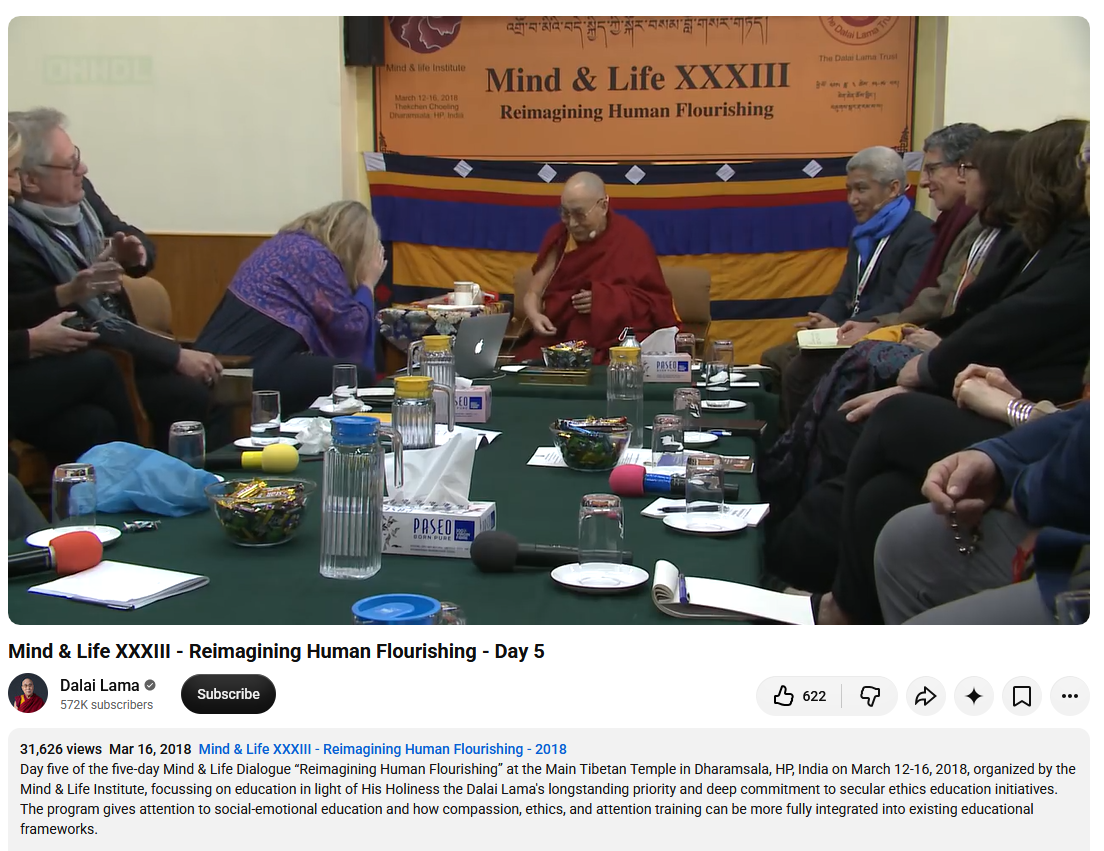
The Flourish Compassionate Schools Project is a CASEL-aligned curriculum created by the University of Virginia (UVA) that leads students through guided meditation and yoga practices. One of the curriculum’s authors, Tish Jennings, said the Dalai Lama was a key inspiration for the program.
Jennings previously worked for the Mind and Life Institute that was co-founded by the Dalai Lama. She presented her research related to student mindfulness and teacher professional development to the Dalai Lama. At the beginning of her meeting with him at his home, she bowed and addressed him as “Your Holiness,” saying, “I’m so grateful to have this opportunity to speak with you.”
Jennings discussed the Compassionate Schools Project with the Dalai Lama and showed him a video of the pilot program in Kentucky. She said, “Thank you for your inspiration because it has played a big role in this work and it keeps us going.”
The program was funded through UVA’s Contemplative Sciences Center by Pure Edge, Inc., whose founder, Sonia Jones, is an avid practitioner of Ashtanga yoga and a leader of the Hindu spiritual practice.
The chairman of the Flourish project is Owsley Brown, III, who is devoted to “enhancing cultural, spiritual, and civic life” and is a “student of theology and the spiritual path.” He is a “long time practitioner of Tibetan Buddhism.”
Flourish was piloted in Kentucky’s Jefferson County Public Schools, reaching over 10,000 students. It’s also used in other schools across the country including in Virginia, Illinois, Idaho, and Tennessee.
Opponents argue that meditation and mindfulness are secular practices, but many of these programs have strong ties to religion. If these programs held ties to Christian prayer, would they be permitted? Likely not.
Christian Concerns
While mindfulness training may sound harmless, the American Center for Law and Justice (ACLJ) points out that these practices confuse children and subvert “the Christian upbringing they’re receiving at home from their own families.”
The ACLJ asserts that mindfulness training is to Buddhism as prayer is to Christianity.
In 2019, the ACLJ was contacted by concerned parents who saw these practices being implemented in their children’s schools. Teachers were implementing meditation sessions and instructing children to worship nature, meditate on their own magnificence, and believe that all men are inherently good.
If prayer can’t be taught, should Buddhist mindfulness practices be allowed?
Buddhist meditation teaches practitioners to turn within to achieve a sense of inner peace and enlightenment. Yet Christian teachings warn about that approach and instruct to put the sole focus on God, who is the only one who can bring reconciliation.
Christian meditation places a reliance on God, not on self. Scripture continually warns against seeking our own self-interests (Philippians 2). Romans 2:8 says, “but for those who are self-seeking and do not obey the truth, but obey unrighteousness, there will be wrath and fury.”
Romans 8: 6–8 continues, “For to set the mind on the flesh is death, but to set the mind on the Spirit is life and peace. For the mind that is set on the flesh is hostile to God, for it does not submit to God's law; indeed, it cannot. Those who are in the flesh cannot please God.”
Perhaps one of the most important scriptures regarding the importance of denying ourselves is Jesus declaring, “Whoever wants to be my disciple must deny themselves and take up their cross and follow me,” Matthew 16:24.
At Jefferson Elementary School in Erie, Pennsylvania, children meditate and repeat the mantra “Peace begins with me.”
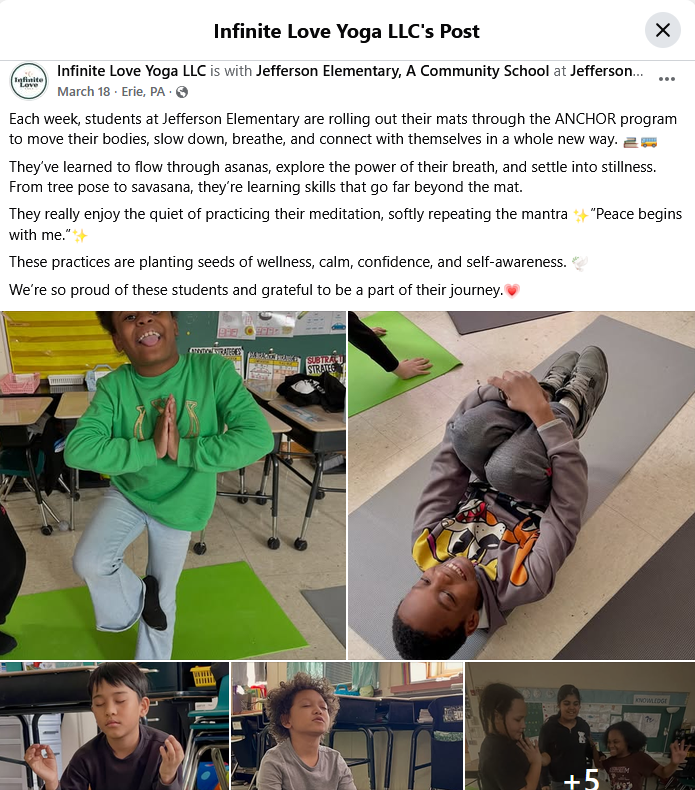
Through SEL programs, public schools are instructing students to focus on self, not Christ.
SEL Is a Big Money Taxpayer-Funded Industry
SEL is a multi-billion-dollar industry that profits from taxpayers who pay for outside contractors selling their wares in school districts. One report estimates the industry was worth $6 billion in 2026 and predicts it will grow to $18 billion by 2032.
The federal government provides grants through the Every Student Succeeds Act (ESSA) that help fund SEL across the nation. Title IV-A ESSA funds must be used for “well-rounded educational opportunities” and “safe and healthy students.” These categories explicitly include SEL.
Many states have embedded SEL into their curriculum requirements and partner with CASEL. Wisconsin wants all graduates to be “socially and emotionally competent” and utilizes the CASEL wheel. The state promotes implementing SEL in a “systemic way, across the district, school, or agency.”
In 2026, the Charlotte-Mecklenburg School Board in North Carolina approved spending $2.4 million on an SEL framework. The district previously had a one-year contract in 2025 with Capturing Kids Hearts for $3.5 million for professional development training for staff to implement “transformational” SEL processes.
The Wisconsin Rapids school district paid $39,000 for the CASEL-aligned 7 Mindsets curriculum in the 2025–26 school year. In Florida, Clay County spent $198,000 in 2021 to implement the same curriculum district-wide.
SEL as Therapy
Some school divisions go even further, entering into therapy-like practices. Fairfax County Schools in Virginia is just one of many districts that use SEL “screeners” on all students. Parents must opt out if they don’t want their children to participate. Topics addressed in these student questionnaires include “cultural awareness, emotion regulation, challenging feelings, and social awareness.” The data is then used to determine what programming (treatments) will be used to “improve mental wellness practices.” Outside organizations such as the controversial Panorama Education are also given access to student mental health data.
The Wisconsin Institute for Law and Liberty warns that some “supports” offered by school divisions cross the line into therapeutic services that can only be administered by licensed professionals with parental permission.
SEL and Social Justice
Not only is SEL used to proselytize, but there is also a social justice component.
Another CASEL-aligned program is the Morningside Center, and its focus areas include critical consciousness, collective healing, political awareness, and transformative social justice.” The group’s main partner is the New York City Department of Education, but it also has a presence in other states including Massachusetts, Georgia, and Pennsylvania.
Morningside promotes a “Culturally Affirming SEL Wheel” and held a webinar on the topic sponsored by the American Federation of Teachers. They called it “our glorious wheel” and said, “It is a living document” that “will continue to evolve and change as the world continues to evolve and change.”
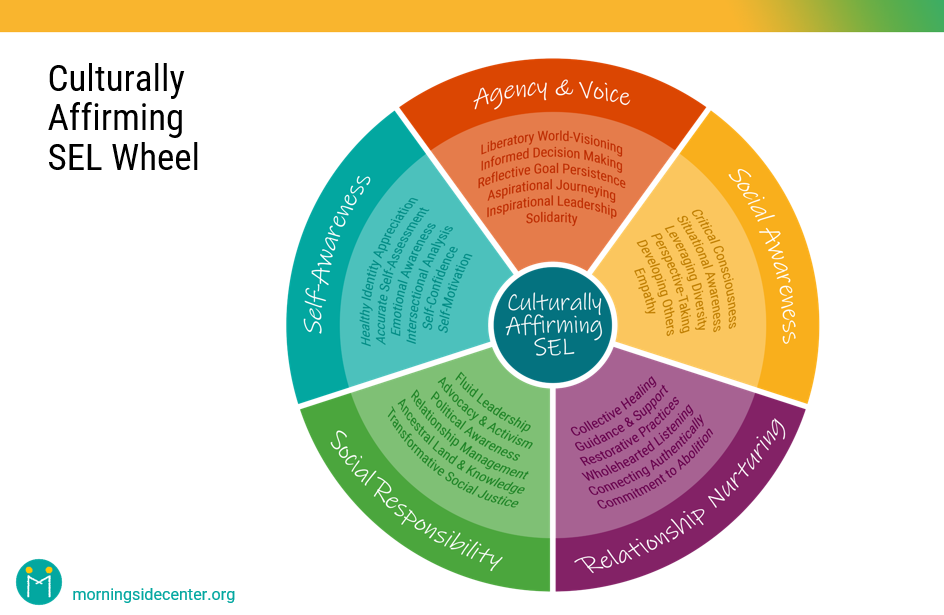
The group declared a new definition of SEL that is “race conscious, that is justice oriented, and recognizes that everything we do in the classroom… and all the frameworks that inform our pedagogical choices cannot be value neutral.”
One of the presenters, Jillian Luft, admitted to a spiritual aspect of their program, saying that when they were developing the SEL wheel they were trying to “keep our minds, and our bodies, and our hearts, and our souls open and flexible.”
The presentation also admitted, “our common goal is to stand up for justice and to stand against those systems of oppression.” Ife Lenard claimed that allies should recognize “the oppression caused by racism, sexism, homophobia and other injustices.” Then another presenter declared, “When I speak of social identities…I’m talking about race, gender, class, sexuality, etc… and how they relate to power, privilege and oppression.” The webinar even encouraged teachers to participate in protest walkouts with students.
Parents and taxpayers deserve to know what is being taught in their children’s classrooms and who profits from it. Programs rooted in Buddhist and Hindu practices, funded by billions in public dollars and delivered with little transparency, mold student hearts, minds, and souls, often without parental knowledge or consent. If the same scrutiny applied to Christian prayer were applied to mindfulness and meditation, these programs would not survive. Parents should ask their school boards for curriculum details, review opt-out policies, and press for real transparency about vendors, funding, and student data. The goal is not to oppose students’ mental well-being, but to ensure that public schools are not deciding the spiritual training children receive.
MORE COVERAGE FROM RESTORATION NEWS
Defeat the CCP: House Select Committee on China: A Working Bipartisan Track Record
America First: Does the GOP Have a Road Back to a Senate Majority?
Immigration: Should a Former Cop from China Who Celebrated Charlie Kirk’s Murder Have U.S. Asylum Status?
Abortion and Life: Babies Were the Midterms’ Biggest Losers—Here’s Why
We need your help to save America—chip in today.
Restoration News, a project of Restoration of America, is your trusted investigative news source for the America First movement. As a rapidly growing conservative news site, we focus on delivering accurate and insightful exposés on political news, immigration news, leftist lies, and other pressing issues affecting everyday Americans. Our uncompromising commitment to a hard-hitting, fact-based, America First, and faithful perspective ensures that you receive news that aligns with your values.
Every dollar gets us closer to winning the war on woke.