The Education Blob: Different Interests, One Progressive Agenda
Teachers’ unions, superintendents, school board associations, and parent organizations represent competing interests, yet their national leaders work together to influence education policy.
During my more than 27 years working in public K–12 education, including 22 years as a classroom teacher, I've watched education policies move from conference rooms into classrooms, where teachers and students live with the consequences.
Today, I work with school board members and see how those decisions take shape.
I've attended Virginia Board of Education meetings where representatives of the Virginia Association of School Superintendents (VASS), Virginia School Boards Association (VSBA), Virginia Parent Teacher Association (PTA) and Virginia Education Association (VEA) sat side by side in the audience.
Their seating arrangement didn’t draw attention. Rather, it was the frequency with which these organizations seemed to support the same policies despite representing groups whose interests should typically conflict.
Teachers’ unions advocate for employees. Superintendents manage school systems and recommend budgets. School boards oversee superintendents, approve spending and establish policies. Parent organizations advocate for families.
These competing responsibilities should produce healthy debate and independent oversight.
Yet these organizations are more often on the same side of education policy debates than on opposing sides.
I began examining their national counterparts. What I discovered helps explain how interconnected America's education establishment has become.
Meet the Education Blob
Most Americans have never heard of the Learning First Alliance (LFA), but they probably recognize its members.
The alliance brings together national organizations representing teachers’ unions, superintendents, school boards, principals, counselors, parents, technology leaders, and school communications professionals.
Critics call this interconnected network the education blob.
LFA's identifies representatives from 11 organizations:
- AASA, The School Superintendents Association
- American Federation of Teachers (AFT)
- American School Counselor Association
- Association of Educational Service Agencies
- Consortium for School Networking
- Learning Forward
- National Association of Elementary School Principals
- National PTA
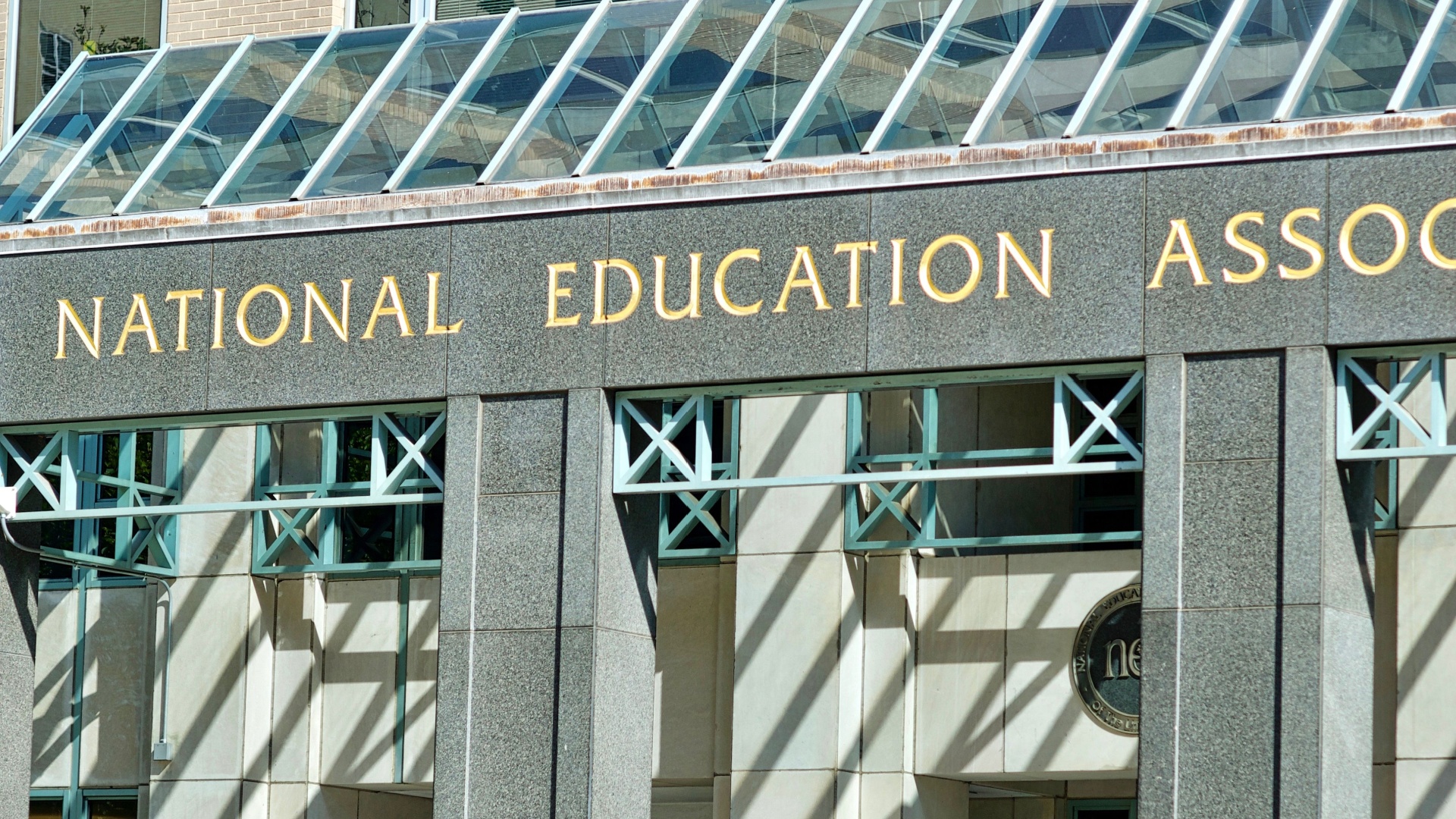
- National Education Association (NEA)
- National School Boards Association (NSBA)
- National School Public Relations Association (NSPRA)
Their representatives serve together on the same governing board.
The alliance openly describes its work in policy development, advocacy, and coordinated communications.
Think about what that means.
Organizations representing employees, the administrators who manage them, the school boards responsible for overseeing those administrators, and the parents whose children attend those schools help direct the same national advocacy coalition.
The concern isn't that these groups communicate. It's whether school boards recognize that recommendations from supposedly independent organizations may originate within overlapping advocacy networks.
A webinar hosted by the alliance reveals just how far some education leaders want to expand the role of public schools.
Schools Can't Fulfill Their Core Mission, Yet These Leaders Want to Expand It
A March 2023 webinar hosted by LFA and the University of California, Los Angeles' (UCLA) Center for the Transformation of Schools provides a revealing example.
The discussion focused on Our Children Can't Wait: The Urgency of Reinventing Education Policy in America and featured Becky Pringle, the then-president of the nation’s largest teachers’ union, the NEA; Joseph Bishop, the center’s co-founder and executive director; and Erin Simon, the then-assistant superintendent of the Long Beach Unified School District.
During the webinar, Bishop urged teachers’ unions, education associations, governors, legislators, and other influential groups to work together to reshape public education, including school governance , the use of education dollars , and who influences policy decisions.
He was calling for a coordinated effort to change the rules, funding priorities, and decision-making structures of public education.
Bishop also discussed dismantling systemic racism and expanding education policy to address housing, health care, air quality, food insecurity, and family stress.
Simon argued that schools should place greater emphasis on social-emotional learning, mental health, and trauma.
"We can't just rely on policies that highlight academic achievement," she said during the webinar.
That statement should concern every parent.
Academic achievement isn't an optional responsibility of public education. It's the reason public schools exist.
When schools struggle in teaching children to read and do mathematics at grade level, what makes these education leaders believe they can successfully tackle housing problems, health care disparities, food insecurity, and systemic racism?
During the Our Children Can't Wait webinar, participants also discussed reducing reliance on school resource officers and shifting resources toward alternative approaches to school safety. Decisions that could affect the safety of students and teachers deserve careful scrutiny, not another experiment driven by national education agendas.
Public schools already struggle to fulfill their core mission, yet these leaders want to expand their responsibilities into areas traditionally handled by law enforcement, health departments, social services, and other government agencies.
Every new initiative requires taxpayer dollars, personnel, training, and time. Every dollar and hour devoted to expanding the mission of public education is a resource that cannot simultaneously be used to improve classroom instruction.
Before asking schools to solve society's problems, education leaders should demonstrate that they can accomplish the job taxpayers already pay them to do: educate children.
One Network, Coordinated Messaging
LFA doesn't just bring education organizations together to discuss policy. It also works to influence how Americans think about public education.
Its #HerefortheKids campaign provides coordinated messaging and social media materials. One of the alliance's members is the NSPRA, which represents professionals responsible for communicating with parents and taxpayers.
Consider a school board preparing to approve a controversial new program that will cost taxpayers millions of dollars.
The superintendent recommends it. The teachers’ union supports it. The state school board association promotes similar policies. The local PTA chapter encourages parents to get behind it.
Then the school division's communications office sends families a polished message explaining why the program is necessary.
To the average taxpayer, it looks like everyone agrees. The experts support it. The teachers support it. The parents support it. Even the organization advising the school board supports it.
But what if these supposedly independent voices are, in reality, part of the same national advocacy network? And who is asking the questions that matter most? Does the program work? What will it cost? What will be eliminated to pay for it? Will it actually improve reading and math scores?
When the same message comes from five different directions, taxpayers may mistake repetition for consensus and consensus for evidence.
That's why independent school board oversight matters. The people elected to represent taxpayers should not simply accept recommendations because every education organization in the room appears to agree.
Taxpayers Deserve Independent School Boards
The NSBA is perhaps the most concerning LFA member .
Think about that. The national organization representing school boards sits alongside teachers’ unions and superintendent associations in a coalition working to influence education policy.
School boards are supposed to oversee superintendents, hold school systems accountable, and protect taxpayer dollars. So why is their national association helping govern the same advocacy coalition as the organizations representing those they oversee?
NSBA's state association network provides training, policy guidance, and other services to local school boards, often funded with taxpayer dollars. That raises an important question about how independently those boards are being advised.
After more than two decades in the classroom, I know that agreement among education leaders doesn't guarantee results for students.
Public schools don't need more responsibilities. They need to fulfill their most basic responsibility: teaching children to read, write, calculate, and think critically.
The education establishment already has a national network advocating for its priorities. Taxpayers need school boards willing to question those priorities.
School boards answer to the people who elected them, not the education establishment.
MORE EDUCATION NEWS:
What Do Abortion and Felon Voting Have to Do with Teaching Kids?
Virginia Schools Audit Exposes Slush-Fund Spending and Privacy Lapse
NEA’s AI Guidance Vilifies Straight White Males
No, Lefties, Open Borders Do Not Fund Schools
Who Needs Parents When School Superintendents Can Raise the Kids?