
FROM THE MAG: The Coming Fusionism 3.0
We'll achieve our vision of a reborn America by harmonizing the experience of the Old Right with the vigor of the New Right.
This is a special preview of an exclusive article from the Winter 2026 inaugural edition of Independence Magazine—our brand-new publication available to read for free online right now.
Want to sign up for your own copy of Issue 2? Click here to support Restoration News and get Independence as our gift to you.
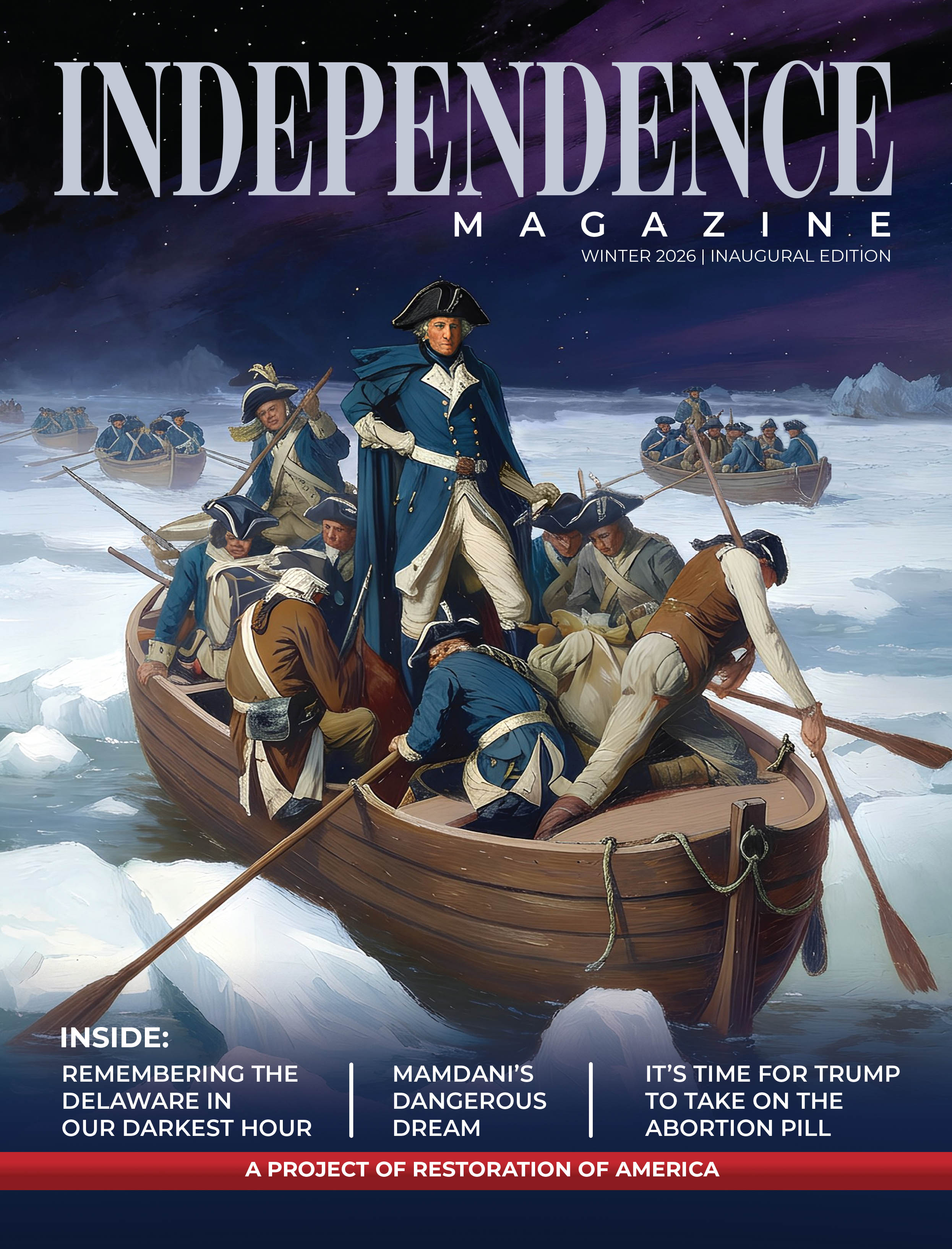 Sign up for your copy of Issue 2 today
History shows that America's culture wars end only when its people rally around a renewed consensus about the nation's destiny. This pattern isn't new—we fought moral and political battles in the 1640s, 1770s, 1860s, and 1980s. In every case, victory came only when patriots forged a common vision of American greatness. Their genius lay in uniting competing factions—nationalists, Christian moralists, and champions of liberty—into majority movements capable of defeating the age's great enemies, whether Tories or Communists.
Bold plans require hard words. The Buckley-Reagan conservative coalition of the 20th century saved Western capitalism and defeated the Soviet Union. Yet it was built for the Cold War, not for the moral and spiritual crises of the 21st century. That old coalition has not found purchase since they won the Cold War. In that vacuum, a new restorationist Right has arisen—populist, audacious, moralizing, and young. Both camps love America. They each seek to permanently vanquish the global Woketariat. But they disagree about how to best express the freedom worth fighting for.
To show this contrast, it helps to overstate the two camps' positions.
Broadly speaking, 20th century conservatism emphasized liberty above all else and was less explicit in preserving public morality. In response, the emerging 21st century movement—which came of age during an amoral and graceless period in American history—insists that liberty without virtue is hollow—that moral order, not mere autonomy, is the underappreciated theme of the American founding.
The answer is to balance the two pillars of morality and freedom. They are not enemies, but highly compatible counterparts that must be wedded together instead of pitted against one another.
We've reconciled such differences before. The first time came in the War for Independence, when Enlightenment liberty and Christian virtue cofounded our great republic. The second came a century ago, when the modern Right united anti-Communists, traditionalists, and free-marketers into the modern conservative movement. Philosophers call it fusionism: Bringing the best of the Right's philosophies together under a single banner.
Now, as the nation celebrates its 250th anniversary, we need a third fusion—one that restores freedom's moral foundation and revives the biblical virtue that makes true liberty possible.
The Founding Truce
Contrary to what is often preached nowadays in our failing government schools, the United States was not birthed from the abstract dreams of French philosophes scribbling social contracts in a "state of nature." The Thirteen Colonies were distilled from a thoroughly Anglo-Protestant mash, steeped in ancient Greco-Roman insights, and crowned with a Lockean head of foam. Bible-quoting farm boys won our independence, but the republic itself was forged as a truce between Christian firebrands like Patrick Henry and Age of Reason intellectuals like Thomas Jefferson. This was the first fusionism—and it's worth drinking deeply from once again.
We're familiar with the 18th century Enlightenment's prevailing definition of freedom as personal autonomy: Each man's right to act according to his own will, limited only by the equal rights of others. But there's an older, earthier understanding from our pre-modern ancestors worth recovering.
In Rome, it was libertas—civic liberty—the art of living well, choosing what is right and just, and rejecting selfish whim. A man was only free if he had mastered himself; even an emperor could be considered a slave if ruled by lust, greed, or fear. The Apostle Paul baptized this ancient wisdom when he reminded the early church that they were "called to freedom" in Christ and delivered from the "yoke of slavery" to sin (Gal. 5).
Romans protected themselves from tyrants through checks and balances, representation, and due process. Every man stood under the law. A Roman could even own slaves and still honor libertas because it rested on citizenship—precious because it was exclusive, not universal. He enjoyed rights and owed duties to the res publica (republic). Freedom meant belonging to a moral hierarchy of responsibility.
To the ancient Germanics, freedom—freiheit—meant loyalty, honor, and mutual obligation. A man was free through his bonds to family and lord, ties that he chose, not those imposed upon him by a conqueror. They were reciprocal and dignified, granting him protection and standing before the tribe so long as he honored his commitments. If a Germanic man broke his oath or refused his duty, he forfeited both honor and freedom.
Libertas secured rights; freiheit guarded relationships. These ideas—precedent, consent, covenant—fused powerfully in medieval England, where kings were elected by nobles and ruled with their subjects' support, while the Christian church reminded all that kings and paupers alike stood equal before a holy God.
To this the Reformation added liberty of conscience: Spiritual self-mastery through obedience to God's Law, read in Scripture without human intermediaries. True liberty is to serve Jesus Christ, since outside God there's only bondage to death. "Free will without God's grace is not free at all," Martin Luther observed, "but is the permanent prisoner and bondslave of evil, since it cannot turn itself to good."
Later, Scottish Presbyterians contributed their "Common Sense" philosophy—the origin of that everyday phrase—holding that all men retain enough light to perceive truth, beauty, and God's moral law even in their fallen condition, a theme that dominated Revolutionary-era sermons.
Stewed in this rich inheritance, colonial Americans were both deferential to law and defiant of tyrants because they held that even law bows before God's Word. This was true among New England Puritans, who prized the liberty to do what is right, and Virginia Cavaliers, who secured freedom with property rights and personal honor.
Their differences notwithstanding, both could in good conscience rebel against an unjust government, abolish their oaths to the king, and covenant with one another in a new nation. No less than Thomas Jefferson and Benjamin Franklin proposed the motto of the young republic be "Rebellion to tyrants is obedience to God."
Read the complete article for free in Issue One of Independence Magazine
Restoration News, a project of Restoration of America, is your trusted investigative news source for the America First movement. As a rapidly growing conservative news site, we focus on delivering accurate and insightful exposés on political news, immigration news, leftist lies, and other pressing issues affecting everyday Americans. Our uncompromising commitment to a hard-hitting, fact-based, America First, and faithful perspective ensures that you receive news that aligns with your values.
Support Restoration of America's fight for freedom and receive your copy of Independence Magazine as our free gift to you.