Election Fraud Cases and the Lessons They Teach
History shows why election integrity legislation is vital to the American republic
American history is filled with cases of indisputable, large-scale election fraud and of chaotic elections that many believe were stolen but that lack hard evidence. Both offer lessons in how corrupt political machines operate and show why election integrity is vital to maintaining a republic by and for the people.
After the 2020 election, 41 percent of voters came away dissatisfied with how it was administered, according to the Pew Research Center. Election confidence has only grown worse since then. A September 2026 survey from the University of California San Diego's Center for Transparent and Trusted Elections shows 51 percent of Americans do not expect the 2026 midterms to be "free and fair." The same survey finds that confidence in the accuracy of the 2024 election has fallen to 55 percent, down from 77 percent.
Even if cheating is as rare as Democrats claim, this lack of confidence is not optimal for national security and unity. Perceived vulnerabilities give legitimate losers ammunition to undermine trust in elections. If life is good, citizens can afford to become apathetic. If the economy and social cohesion slip, however, people will look for extra-political, often violent, solutions for change.
Sadly, America's election insecurities are not simply perceived.
America ranks dead last in a 2025 Meyers Report investigation of election laws in 37 countries. The report views national reforms like restricting absentee voting, requiring proof of citizenship to register, and requiring photo ID to vote as definitive ways to fix most of the issues.
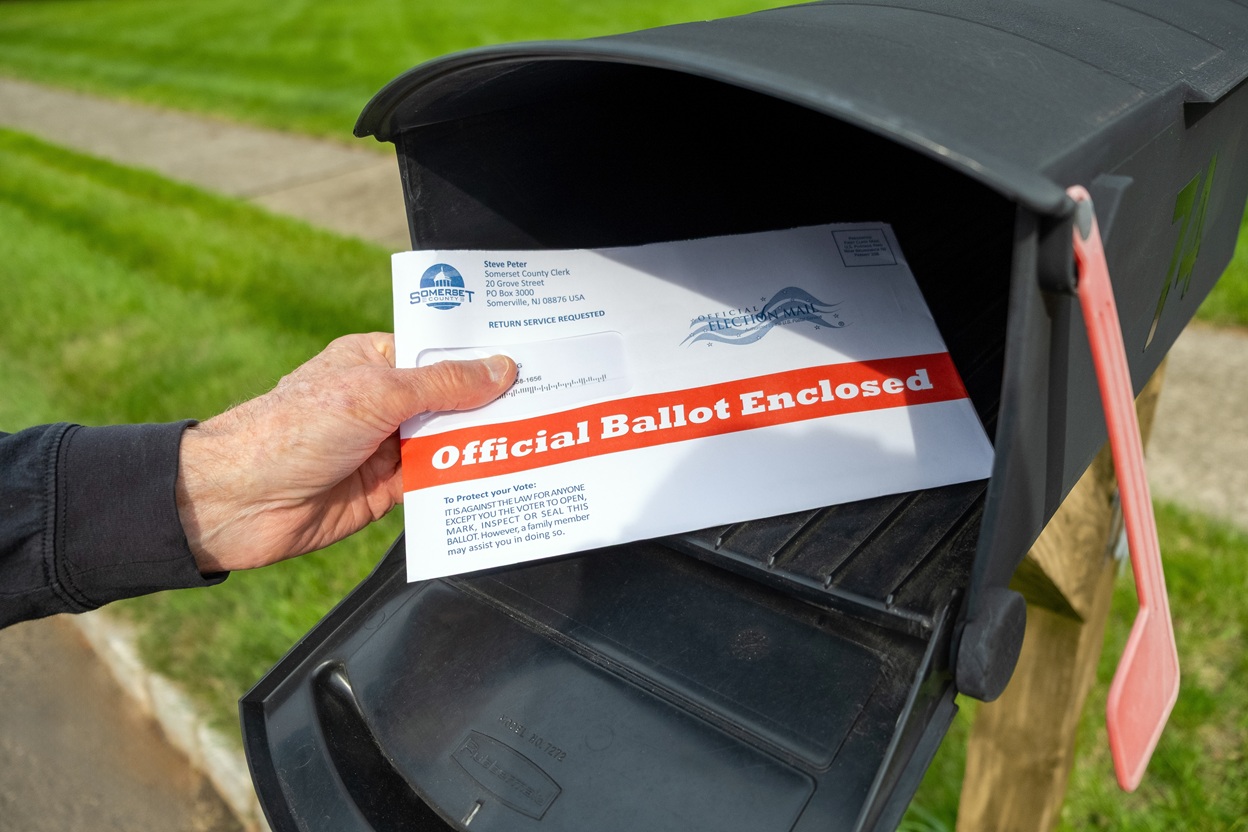
A recent Postal Service rule would address the absentee chain-of-custody issues by standardizing ballot tracking in the mail. The Safeguard American Voter Eligibility (SAVE America) Act would address the country's lack of national identity verification at registration and the polls. Unfortunately, Democrats, and even some Republicans, don't consider the problems grave enough to warrant the mild steps these solutions would ask of voters. The Postal Service rule came too late to defeat liberal court challenges ahead of the November midterms, and the SAVE America Act has stalled in the Senate.
Democrats are correct when they claim that stolen elections were more common in the nineteenth century. But early twentieth-century electoral reforms did not retire political machines' playbook. Fraudsters simply learned to adapt to the secret ballot, increased scrutiny, and an expanded electorate after women gained the right to vote.
The following elections—all within the past hundred years—were tainted by proven fraud or its credible suspicion.
Honorable Mentions
Kennedy vs. Nixon
John F. Kennedy won the Electoral College 303–219 but only carried Illinois by 8,858 and Texas by 46,257. Had he lost both, Richard Nixon would have become president in 1960.
Chicago Mayor Richard Daley's (D) machine had a long reputation for electoral fraud, and some historians believe that it stole the state. In Texas, Kennedy's running mate, Sen. Lyndon B. Johnson (D), had already stolen his first Senate election and reportedly had numerous county machines willing to do his dirty work again. Historians remain split on whether Kennedy honestly won both states.
The Baldwin County Computer Glitch
Just two years after the Florida chaos between then-President George W. Bush and Al Gore, Alabama kept voting machines in the news.
On Election Night in 2002, incumbent Gov. Don Siegelman (D) was declared the winner and gave a victory speech. After Democratic Party observers went home, an apparent computer glitch in Republican-heavy Baldwin County deleted over 6,000 votes from Siegelman's total, handing Republican Bob Riley the win. Alabama Attorney General Bill Pryor (R) refused to order a recount and warned that opening the ballots would constitute a crime. This episode remains a reminder of how a tabulation "error" can flip a race overnight.
The Egregious Eleven Countdown
11. Boss Crump and the Hatch Act
Former Memphis Mayor Edward "Boss" Crump ran the city as his personal fiefdom long after leaving office in 1915. His machine persistently manufactured thousands of poll-tax receipts and used the names of dead voters to lock in preferred candidates.
In 1938, that machine turned the Works Progress Administration into a campaign operation. In the Democratic primary for U.S. Senate, it pressured federal workers and job seekers to campaign and vote for Tom Stewart to defeat incumbent Sen. George Berry.
Stewart won. But that election cycle's abuse of federal jobs by the Crump machine in Tennessee and Democrats in other states sparked a congressional investigation that produced the Hatch Act. The law bans using federal relief funds for campaigns and bars federal employees from engaging in political activity on the taxpayer's dime.
10. The Battle of Athens
In rural eastern Tennessee, the Crump-allied machine in McMinn County didn't bother with niceties like letting dead people vote or paying voters with government jobs. Armed deputies simply seized ballot boxes, counted them in secret, and declared whichever candidate their boss preferred the winner.
That changed in 1946, when World War II veterans formed the GI Non-Partisan League and ran their own ticket to break up the racket. When the sheriff's men locked the boxes in the Athens jail, the veterans armed themselves from the local National Guard armory and blew the jail doors off with dynamite. After the ballots were properly counted, the veterans' slate won.
9. The North Carolina Ninth
In 2018, Republican candidate Mark Harris won the vote for North Carolina's 9th Congressional District. However, the North Carolina State Board of Elections refused to certify when its investigators found a coordinated illegal ballot-harvesting scheme by Republican operative McCrae Dowless, who worked for the Harris campaign. Dowless and his conspirators collected unsubmitted absentee ballots from low-income voters, filled them out, and forged the signatures.
Harris declined to run again, and Republican Dan Bishop won the seat in a new election. Dowless was indicted but died in 2022 before his trial.
8. Connecticut Drop-Box Stuffing
Allies of Bridgeport Mayor Joe Ganim were arrested in 2025 for their role in alleged fraud in the city's 2023 Democratic mayoral primary.
State police say surveillance footage captured then-Democratic Town Committee Vice Chairwoman Wanda Geter-Pataky illegally depositing multiple absentee ballots into a drop box. Witnesses testified that she and others, including three city councilmembers, also registered noncitizens, misled people about eligibility, filled out voters' ballots, and changed votes after they were cast. This prompted a judge to order an election rerun, which Ganim won again in 2024.
Geter-Pataky faces 96 felony counts in addition to charges related to 2019 absentee fraud. Two of the indicted city councilmembers, who also face multiple felonies, recently won reelection despite their criminal charges.
7. The Greene County Assembly Line
In 1994, absentee voting in Alabama typically ran in the single digits. But a joint investigation by the Alabama Attorney General's Office, the Department of Justice, and the FBI found that, in Greene County, it constituted over a third of ballots cast. On Election Day, just five people delivered most of them in suitcases. Investigators also discovered ballots stolen from mailboxes and people being threatened with the loss of government assistance if they didn't vote as they were told.
Incumbent County Commissioner Frank "Pinto" Smith organized an "assembly line process" in which supporters filled out absentee ballots the night before Election Day. One of his supporters, a county registrar, signed 166 of them as a witness. Smith lost the in-person vote but won thanks to the overwhelming support he received from absentee voters.
Rather than defend the black voters and candidates who fell victim to fraud, the National Association for the Advancement of Colored People and the Southern Christian Leadership Conference provided legal defense to the fraudsters and accused the investigation of racial discrimination and voter intimidation. In the end, the case produced 11 convictions, including a county commissioner, a city councilman, and a school board member. Absentee voting in the county then dropped to around five percent in later elections.
6. Miami Mayhem
In the 1997 Miami primary, incumbent Mayor Joe Carollo won in-person voting, but lost absentee ballots to former Mayor Xavier Suarez by a nearly 2–1 margin. Suarez then won the runoff. A circuit court judge threw out the election after finding that fraudsters had forged absentee requests from eligible voters, filled out ballots for felons and dead people, and taken advantage of nursing home residents.
An appeals court then disqualified the absentee ballots, which handed the office back to Carollo. Around two dozen people were arrested, including a county commissioner who served jail time.
5. The Dodge County Courthouse Auction
A 1996 Democratic primary for sheriff and a county commissioner seat brought national attention to rural Dodge County, Georgia's culture of rampant vote buying and absentee fraud.
Campaigns set up tables at opposite ends of the courthouse hallway, and "vote buyers for both sides paid the voter $20 to $40 after the voter cast his or her absentee ballot. Sometimes, the cash payment occurred in the courthouse bathroom. More frequently, the voters received their payment while the 'haulers' drove them home after they voted." One local magistrate, notes the U.S. District Court appeal, called the operation "a successful flea market," A supporter who paid the "haulers" admitted that "vote buying was a way of life in Dodge County politics."
Georgia officials considered it "extremely high" if absentee ballots exceeded 10 percent of the total voting population. In Dodge County, they jumped to 15 percent. Absentee voters with high school and college degrees frequently cited illiteracy as an excuse for accepting help in filling out their ballots. One man claimed he needed assistance because a mule had kicked him in the head.
A joint federal-state probe led to an election rerun and sentences for 27 people. The incumbent sheriff and commissioner each served over two years in prison.
4. Philadelphia's State Senate Steal
This is a case President Donald Trump frequently referenced on the campaign trail as an example of Philadelphia corruption.
In 1993, State Sen. William Stinson (D) won his special election for Philadelphia-area District 2 by only 461 votes. Despite Republican Bruce Marks winning the in-person vote, Stinson won absentee ballots in a landslide.
U.S. District Judge Clarence Newcomer stated that Stinson knew about the scheme and colluded with Democratic members of the Philadelphia Board of Elections to steal the election by delivering blank absentee ballots to campaign workers who then filled them out in the names of ineligible voters. Newcomer, writes the same New York Times article, threw out the result and awarded Marks the seat. This flipped control of the state senate to Republicans.
3. The Chicago Machine
The Chicago Tribune won a Pulitzer for documenting more than 1,000 instances of fraud in the 1972 Democratic primary driven by Mayor Daley's (D) political machine.
The newspaper reported that campaign workers forged signatures on ballot applications "so crudely ... that they were impossible not to spot even under the most superficial examination." They used these in the primary "to ring up votes of dead, critically ill, unregistered, and nonexistent persons and of voters who had not gone near a polling place." Democratic ward bosses even installed fake Republican poll workers to give their precincts the appearance of bipartisanship.
A federal grand jury, wrote the Tribune in 1973, indicted 79 election workers, resulting in dozens of convictions. This prompted the Illinois legislature to pass an eight-bill election reform package that included the creation of the Illinois State Board of Elections. The reforms passed over Gov. Dan Walker's (D) veto.
2. "Landslide Lyndon"
As mentioned, former President Johnson stole his first U.S. Senate election.
In 1948, Coke Stevenson comfortably beat him in the Texas Democratic primary. The margin narrowed in the runoff, but Stevenson still led initially. Six days after the vote, however, Johnson-leaning counties replaced previous tallies with highly improbable numbers. In Jim Wells County, Box 13 produced 202 additional votes—200 for Johnson, and only two for Stevenson. All 202 were in the same handwriting and listed in alphabetical order. This gave Johnson the win by 87 votes out of nearly a million cast.
Election judge Luis Salas, according to the 1977 New York Times article, later confessed that he added the names on orders from political boss George Parr. Johnson biographer Robert Caro believes that Johnson allies manufactured thousands of additional votes across the entire Rio Grande Valley.
A federal judge's attempt to investigate was blocked on jurisdictional grounds, and Johnson boastfully called himself "Landslide Lyndon" after being seated in the Senate.
"I don't think that this is the only election that was ever stolen, but there was never such brazen thievery," Caro concluded.
1. The Chicago Machine Sequel
The reforms Illinois passed after 1972 did not fix Chicago's underlying problems. Ten years later, the city's Democratic machine ramped up production more than ever. This time, Washington was ready. The subsequent probe became the largest federal investigation of election fraud in American history and resulted in 72 convictions.
"Most of those convicted held a party-patronage position, essentially resulting in one-party control of the election process," Charlie Mandigo, the case's FBI supervisor, told Restoration News via email.
Heritage Foundation research cites then-U.S. Attorney in Chicago Daniel Webb who, in testimony, estimated 100,000 fraudulent votes.
"Ineligible registered voters provided the opportunity to cast fraudulent votes by a wide variety of means," Mandigo said, adding that records showed 25 to 30 percent of the city's registered voters were ineligible, including roughly 60,000 noncitizens.
Corruption abounded everywhere, but the prize the city's machine went all out for was the governor's mansion—where it fell just short. Gov. James Thompson (R) led in polls by 15 points before the election but barely beat Democrat Adlai Stevenson III by 5,074 votes out of 3.67 million, or 0.14 percent.
What the Record Teaches
Fraud follows opportunity, and single-party control of government without transparency creates both the temptation and the means. Throughout American history, political machines padded the rolls with the dead and ineligible, used absentee ballots to boost preferred candidates' numbers, and counted votes in private.
Many of the accusations of fraud in 2020 centered on these time-tested methods. Others arose from unique COVID-19-era policies like private funding of election management, ballot drop boxes, and no-excuse absentee voting.
Mark Zuckerberg's donations alone totaled $420 million in grants to fund election operations through the Center for Tech and Civic Life. Left-leaning nonprofits marketed these donations as pandemic relief to local governments. That funding, however, went disproportionately to Democratic-leaning counties and cities. Even Zuckerberg later admitted that his grants "benefited one party over the other."
Absentee voting and drop boxes also helped Democrats by making ballot-harvesting easier, since Democratic voters live in denser areas than Republican voters. The fact that local Democratic machines run the large urban centers where most of these ballot dumps were tallied did not quiet allegations of fraud.
Multiple states have done well to address these concerns since 2020. New laws have banned private election funding, limited drop boxes, tightened chain-of-custody rules, and required government-issued photo ID numbers on absentee ballots to avoid relying on self-attestation and signature-matching.
In 2021, the Voter Reference Foundation launched to encourage voter participation by "ensuring transparent, accurate and fair elections." It offers citizen auditors a tool to hold their local and state elected officials accountable at VoteRef.com, where it publishes publicly available voter rolls free of charge. This allows people to check whether the rolls and voting records match official election results.
Despite these grassroots-driven improvements over the past half-decade, the United States ultimately needs federal solutions to address election vulnerabilities in states where they persist. Three steps the federal government can take are forcing states to maintain clean rolls, track absentee ballots, and verify that all voters are eligible and identified. The Postal Service's absentee ballot-tracking rule will likely win in court on the merits after the midterms. The SAVE America Act would offer a fraud prevention firewall through voter identification. Americans can urge their senators to pass it at SaveActNow.com.
Election fraud in America is not theoretical. Neither is the remedy.
MORE COVERAGE FROM RESTORATION NEWS
Education: Katie Hobbs Faces a Federal Reckoning Over Late Audits
ROAF Report: Comstock Act Is 'Law of the Land'—Enforce It
Energy and Environment: Rediscovering Thomas Jefferson’s Revolutionary Charge Against Abusive Taxation Schemes
Corruption: Michigan Fraud Investigation Unit Waved Through Billions in Questionable Medicaid Claims
We need your help to save America—chip in today.
Restoration News, a project of Restoration of America, is your trusted investigative news source for the America First movement. As a rapidly growing conservative news site, we focus on delivering accurate and insightful exposés on political news, immigration news, leftist lies, and other pressing issues affecting everyday Americans. Our uncompromising commitment to a hard-hitting, fact-based, America First, and faithful perspective ensures that you receive news that aligns with your values.
Every dollar gets us closer to winning the war on woke.