MAHA—with Real Sugar
Coca-Cola's switch from high fructose corn syrup to cane sugar offers an example how RFK is changing the American diet for the better
Robert Kennedy Jr.'s Health and Human Services is making America healthy again by partnering with classic American companies to make their products healthier. For Coca-Cola, that means bringing back real sugar.
The company announced recently that beginning this fall, American consumers will have the option to purchase the company's signature beverage with cane sugar. This follows pledges by Kraft Heinz and Kellogg to remove artificial dyes by 2027, another major push by Kennedy in his MAHA agenda.
In the mid-20th century, no brand marketed American post-war prosperity better than Coca-Cola. Its advertisements showed the youthful, triumphant vibrance of a nation fresh off a two-front victory with the strongest economy in human history, and its sales dwarfed those of every other soft drink worldwide.
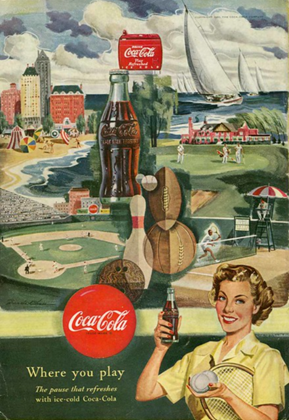 June 1950 Coca-Cola "Pause and Refresh" Print Ad
Today, however, that era's Coca-Cola craze baffles anyone who's had a Coke Classic in the past two generations. Many place the blame on the replacement of cane sugar with high fructose corn syrup (HFCS). As with most American-made sodas, replacing cane with corn not only made American soda taste worse but studies show HFCS exacerbates health problems associated with excess sugar consumption.
(READ MORE: It’s Time to Make America Healthy Again)
Why Did America Abandon Cane for Corn?
For decades, policy decisions favoring HFCS over cane sugar influenced the American junk food market. Economic incentives rather than health considerations drove this shift.
The dominance of HFCS in the U.S. food supply stems from government policies that prioritized corn industry profits over public health. HFCS was invented in 1957 but didn't overtake cane sugar by popular demand.
Beginning in the 1970s, the federal government increased subsidies to the corn industry. Today, it's the most subsidized farm product on the market, coming in at $3.2 billion in 2024.
In the early 1980s, President Ronald Reagan introduced sugar import quotas, officially intended to help domestic sugar manufacturers avoid the boom-and-bust cycles of the free market. This resulted in Americans losing tens of thousands of jobs in sugar-related manufacturing such as candy factories. It also resulted in the near doubling of the average U.S. sugar price from 1982–2016.
In 1984, Coke made the switch to HFCS. Elsewhere, Coke continued to use cane sugar or beet sugar. Interestingly, its market share in Latin America, where cane sugar remains king, surpasses its U.S. market share in 1948.
Coke's switch occurred suspiciously at the same time it tried to launch its failed "New Coke," sweetening the deal by adding more "sugar."
The Harvard Crimson's Nick Wurth expressed what many American consumers felt at the time about the classic beverage's sudden change:
Let's stop them. They have no right to change Coke. Sure, they may own the pieces of paper that give them legal authority to do what they will with the soft drink. . . . But Coke can no longer be considered the specific property of any corporate entity. Coke, like apple pie and mom, belongs to all of us. Would we tolerate it if America's mothers gathered together and announced that because we had been eating a little too much pumpkin pie recently, they—as a group—were going to dump an extra half-cup of sugar into every one of their apple pies?
The company received so much similar backlash, it reverted to its original, which it dubbed "Coca-Cola Classic," only this alleged "classic" now contained HFCS.
Health Benefits of Cane Sugar Over HFCS
Cane sugar, derived from the crystalized juices of sugar cane, is chemically sucrose, a disaccharide composed of 50 percent glucose and 50 percent fructose. HFCS is a processed sweetener made from corn starch, which is supposed to contain 55 percent fructose and 45 percent glucose. A 2014 study in the journal Nutrition, however, found most sodas on the American market average 60 percent fructose—Coke having 59.4 percent.
Metabolic Differences
The main concern centers on the higher fructose content in HFCS. A 2013 Yale University study linked fructose to higher risks of obesity and related diseases compared with glucose. While all forms of sugar pose health risks, research shows cane sugar's slight health edge owes to differences in metabolism.
Fructose is metabolized primarily by the liver. Glucose is processed throughout the body. Fructose consumption leads to fat accumulation in the liver, contributing to non-alcoholic fatty liver disease (NAFLD). A 2022 study found that, compared with sucrose, HFCS consumption was associated with higher levels of inflammation—a risk factor for obesity, type 2 diabetes, cardiovascular disease, and other metabolic disorders.
Unlike sucrose, HFCS does not trigger insulin release or leptin production, a hormone that makes one feel full—potentially leading to overconsumption and weight gain. Cane sugar's balanced glucose-to-fructose ratio is less likely to overwhelm the liver's metabolic capacity when consumed two or three times a day.
"The increased fructose amount in the [corn syrup] may seem slight, but our exposure is linked to Type 2 diabetes, heart disease, increased appetite and liver disease," Hope Barkoukis, chair of the Department of Nutrition at Case Western Reserve University, told CBS News.
Soda makers' mid-1980s transition to HFCS paralleled a sudden spike in obesity rates—more than doubling from 15 percent in 1980 to 32 percent in 2000. It steadily climbed to over 40 percent by the late 2010s, where it's leveled off.
Poor Americans have often depended on the high calorie content of Coke to supplement their meager diets by drinking it with meals or in place of meals. Fructose's weaker triggered insulin release makes this misguided habit even more dangerous, and more pernicious in lower socioeconomic classes.
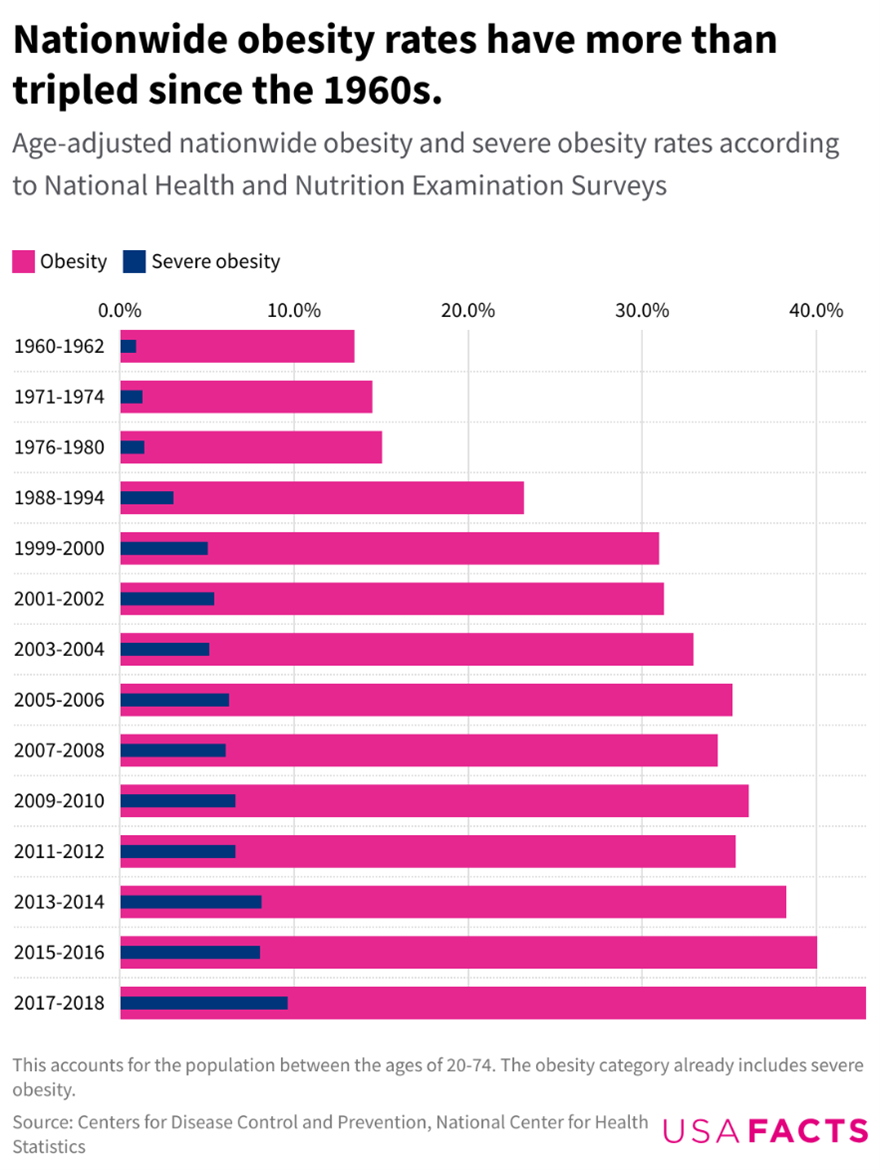 Source: USAFacts.org
The slowing obesity spike after 2000 and the recent obesity reduction are not coincidental. As time passed, more Americans realized one of their country's pastime beverages was killing them faster. Annual soda drinking dropped from 53 gallons per capita in 1998 to 41 gallons in 2014.
Ironically, much of the awareness of soda's impact on the obesity crisis came from the federal government—the entity responsible for making soda so unhealthy in the 1980s. Not only did the government motivate Coke to butcher its own product, but it then butchered Coke's sales when the effects of the first butchering became apparent without making any course correction on the sugar front.
Taste and Consumer Preference
Unhealthier ingredients are known to at least improve taste in most foods and beverages. HFCS is so bad, it can't even manage this. Cane sugar Coke is widely perceived as tasting better than HFCS Coke.
Paul Breslin, a Rutgers University nutrition professor who specializes in the genetic basis of taste perception, told the New York Times that blind taste tests show people clearly prefer real sugar in their sodas to HFCS.
In 2012, Coke issued stereotypical, jargon-loaded marketing tripe, claiming its consumers couldn't tell the difference. To find out, 20 Huffington Post editors conducted their own blind taste test. Eighty-five percent noticed a difference, and 80 percent liked Mexican Coke better, finding it lacked the aftertaste of American Coke and had "a cleaner, less artificial flavor."
After Trump announced Coke's decision, the Washington Post, a vicious enemy of Trump's and Kennedy's policies, did their own blind taste test with six staffers. Five of them favored the Mexican version.
Cane sugar's taste advantage, while subjective, shows there is a market for Coke and other soft drink products to leverage by replacing HFCS with cane sugar. It also leverages the nostalgia of arguably America's greatest era.
Kennedy Shows the Power of Government Signaling and Negotiation
Government policy often drives bad food quality. Companies want to make the most amount of money with the least amount of resistance. If that means marketing an inferior product to unhappy consumers because the government makes certain ingredients cheaper, so be it. By signaling a governmental shift on sugar, Kennedy is giving companies the green light to realign their junk food production to public junk food demand.
His MAHA campaign is succeeding by using his office's influence rather than regulatory mandates. His rhetoric, labeling HFCS as "poison," resonates with health-conscious consumers. This boosts demand for soda made with real sugar and weakens resistance from the pampered but powerful corn lobby. By getting Coca-Cola to buy into the mission, it avoids potential drawn-out litigation on the taxpayer's' dime.
Economic Opportunities in a Shift to Cane Sugar
Corn farmers will not take the MAHA threat lying down, and champions of lower obesity and diabetes rate cuts can expect a renewed onslaught by Big Agriculture lobbying Congressional Republicans. On the economic argument, they will have a point. Transitioning back to cane sugar cannot come immediately. For Coca-Cola alone, analysts estimate a complete transition would increase the company's sweetener costs by 80 percent or a little over $600 million annually. This will require a 36 percent increase in American cane sugar production or substantial imports or a 50 percent increase in cane sugar imports.
This will massively increase opportunities for American sugar cane farmers. Florida produces half of the country's 3.6 million metric tons of cane sugar annually, and Texas and Louisiana would also see their sugar cane industry expand. Additionally, it would remove the justification for sugar import quotas to protect domestic sugar production.
MAHA Doesn't Just Mean Salads and Water
Any plan to use government to return Americans to a healthier diet should consider what Americans consumed when they were healthier. Americans weren't on strict diets in the 1950s and 60s. A healthy society includes junk food containing satiating natural ingredients that serve as treats, which don't unnaturally trigger consumers to immediately crave more.
Kennedy deserves credit for using his office to work with one of the most iconic American companies to improve its product. This tactic is more efficient and long-lasting than going the nanny state route of former New York City Mayor Michael Bloomberg.
It's important, however, to remember that lasting policy change requires the willpower to drag big business kicking and screaming over the finish line if corporate leadership become stubborn. That's the method the federal government used in the 1980s to lead companies to adopt HFCS. Using bully mechanisms like tariffs, quotas, and tax incentives will ultimately be necessary to convince soft drink companies to abandon HFCS.
It is possible to "MAHA" without putting everyone on a diet. Leveraging public sentiment and corporate responsiveness proves competent leadership can often outpace regulation in reshaping dietary trends. After four decades of corn-fed policies, the federal government will need to put its thumbs on the scales to incentivize a full soda return to cane sugar. Until then, a competing product with real sugar will allow Americans to enjoy their country's signature soft drink without shortening their natural lifespan any more than their grandparents did when they drank it.
(READ MORE: The Trump Administration Sets Its Sights on the Parallel Government)