Churches Should Never Have Been Barred from Endorsing Candidates. Trump Just Righted That Wrong.
The IRS has ceased silencing Christians from speaking out in the pulpit in a major victory for religious freedom and free speech.
A 71-year running battle between pastors bringing the Bible into politics and Uncle Sam has ended with the IRS throwing in the towel—a tremendous victory for religious liberty in America.
The outcome centers on a lawsuit filed against the IRS last August by a handful of faith-based advocacy groups and churches arguing the 1954 Johnson Amendment—which restricts tax-exempt churches from intervening in elections—violates the First and Fifth Amendments to the Constitution.
Instead of battling in court, the Trump IRS agreed to a settlement—clarifying that "when a house of worship in good faith speaks to its congregation . . . concerning electoral politics viewed through the lens of religious faith, it neither 'participate[s]' nor 'intervene[s]' in a 'political campaign.'" In other words, preaching on political issues as "matters of faith [does] not run afoul of the Johnson Amendment."
The Texas district court has yet to issue a formal judgment as of writing. But its position effectively codifies a 2017 Trump administration order (E.O. 13798) barring the Treasury Department, which governs the IRS, from taking "any adverse action against any individual, house of worship, or other religious organization" who speaks out on political issues that would usually conflict with the Johnson Amendment. That order remained in force throughout the Biden administration.
J.P. De Gance, president of Communio—a faith-based nonprofit that helps churches share the Gospel by renewing healthy marriages—considers the IRS' position "a bold step in the right direction to restore and protect freedom of speech in America."
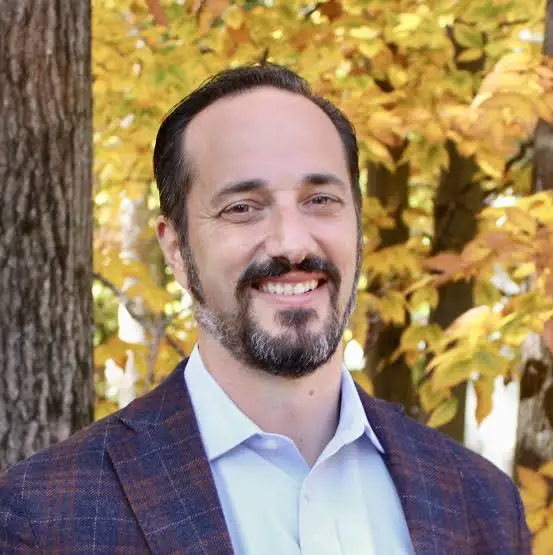 J.P. De Gance
"While the government often aggressively advocates for progressive morality, it's critical that pastors have the freedom to speak the truth to their congregations without fear of reprisal," he told Restoration News.
While the Johnson Amendment was supposed to muzzle both sides, it only ever stopped conservative churches from endorsing Republicans—but never liberal churches that support Democrats.
That was on fully display in Georgia's bitter 2020 Senate election and 2021 runoff, when black churches rallied to elect radical Democrats Raphael Warnock—a senior pastor at Martin Luther King's Baptist church—and Jon Ossoff. "Let's keep Georgia blue. Let's elect Jon Ossoff, Raphael Warnock to the United States Senate," African Methodist Episcopal Bishop Reginald Jackson blasted through a loudspeaker at an Atlanta church rally. The New York Times credits Bishop Jackson with turning the state's "disjointed" Democratic Party "into a political machine [by] mobilizing Black voters of faith" to flip the state blue.
Unsurprisingly, the IRS never investigated these churches' potential Johnson Amendment violations after 2020.
Conservatives focused on getting out the Christian vote couldn't be happier.
"We lost 502,000 conservative, churchgoing voters in 2020 who stayed home. We can't afford that silence again," John Pudner, president of the Wisconsin Faith and Freedom Coalition, told Restoration News. His group is part of a national network of grassroots faith turnout groups targeting Evangelicals and Catholics, knocking doors and passing out fact-focused education pamphlets in the 2024 election. "This is a breakthrough for churches that will open the door to thousands more to reengage in the future."
It's also the right thing to do.
A Victory Long in the Making
The prohibition dates back to then-Sen. Lyndon B. Johnson, who added the measure that took his name to the Revenue Act of 1954 passed by the Eisenhower administration. There was no floor debate nor discussion of intent, or even a record of who voted for it (the measure passed by voice vote) so Johnson's views remain murky.
Yet scholars suggest it was all about Johnson's clever politicking. The Texas Senator faced strong opposition in the 1954 Democratic Senate primary from two tax-exempt 501(c)(3) nonprofits—the Facts Forum and Committee for Constitutional Government—which were distributing materials critical of Johnson, something his measure specifically outlawed. In other words, he was helping himself—which is why many scholars argue there's no reason to believe that Johnson meant to stifle churches, which fall under the IRS 501(c)(3) designation.
The Trump IRS agrees.
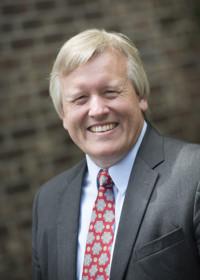 John Pudner
Naturally, leftists have attacked the outcome as violating separation of church and state. The left-leaning National Council of Nonprofits argues it "protects" churches from "the caustic partisanship bedeviling our country." California Gov. Gavin Newsom (D) blasted the IRS' position as "politically convenient and cynical." (Worth noting: Newsom's multiple campaign stops at prominent churches in South Carolina this month, ahead of his expected 2028 presidential run.)
In fact, the IRS move is restoring the most essential provision of the First Amendment—the right of clergy to criticize the government and mobilize faithful Christians to action. Without that right, the American Revolution wouldn't have gotten off the ground.
For two-and-a-half centuries, historians have recognized the central role pastors—overwhelmingly Anglicans, Baptists, Congregationalists, and Presbyterians—and their red-hot political sermons played in mobilizing colonists to the patriot cause and later shaping our new government. This was clearly understood by both sides, with one British officer famously dismissing the patriot cause as "nothing more nor less than an Irish-Scotch Presbyterian Rebellion." "Cousin America has run off with a Presbyterian parson," Prime Minister Horace Walpole joked to Parliament.
"To the Pulpit, the Puritan Pulpit, we owe the moral force which won our independence," wrote historian John Wingate Thornton in his collection of political sermons from the founding era.
Preaching What They Practice
Fast forward over two centuries, and abolishing the Johnson Amendment altogether has become a powerful ecumenical issue uniting Catholics and Evangelicals alike.
"We've worked for over 30 years to get churches to be more vocal on abortion, and that includes being more vocal on abortion politics," Fr Frank Pavone, national director of Priests for Life and a laicized Roman Catholic priest, told Restoration News. "We, and top constitutional lawyers with us, were making the argument decades ago that the Johnson Amendment is unconstitutional that the IRS seems to be making now."
"When a pastor's preaching the word of God in the pulpit, he's not only exercising his freedom of speech but his freedom of religion. He's not just preaching the Word, but actually applying it to the lives of the people he's preaching to," Fr Pavone explained. "So if he says, 'as Catholics we must vote against the pro-abortion Democratic Party,' he's performing an act of worship. And the IRS seems to agree with that."
Pudner agrees, calling the outcome "the most dramatic game-changer for churches in decades."
"Now, after 70 years, we can finally reassure pastors that speaking out won't jeopardize their church," he explained. "That turns an hour-long legal discussion into a five-minute green light, unlocking outreach to thousands more churches."
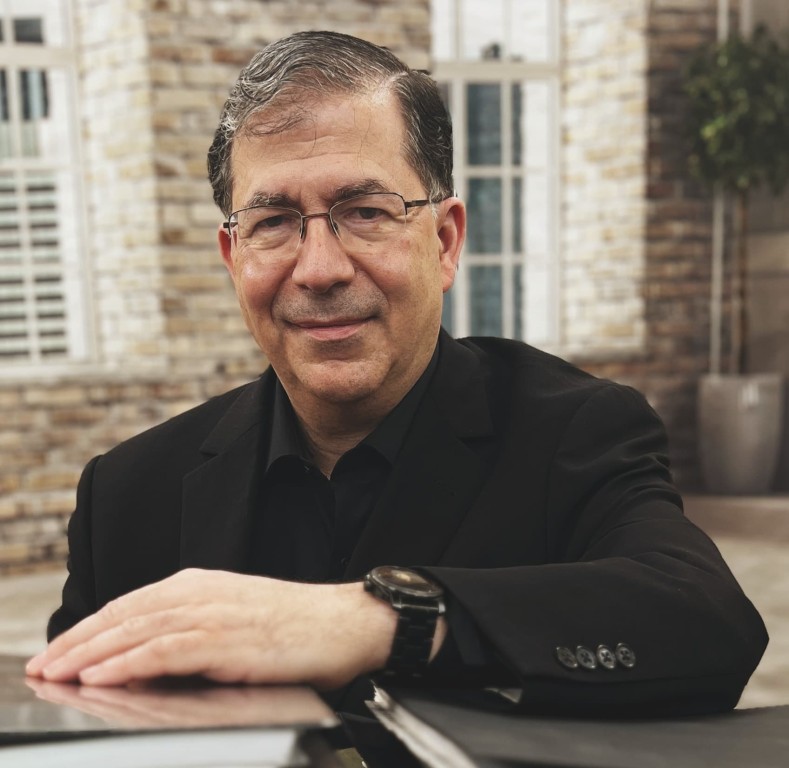 Fr. Frank Pavone
Though the Johnson Amendment was rarely enforced, Fr Pavone told me the IRS audited Priests for Life two decades ago for his aggressively anti-abortion sermons—every pastor's greatest fear. "They went through all my sermons looking for violations before concluding we hadn't broken the law," he said.
Because of this, Fr Pavone believes the outcome "very significant" for countering the "fear-mongering of misguided church leaders who don't want to deal with tough political issues" because they see it as "bringing politics into the pulpit."
"They like to play 'hide behind the tax guy' as an excuse for cowardice," he told me, "exaggerating the limits imposed by the Johnson Amendment to block priests and laity from 'indirectly disparaging' the positions of a particular political party, even on abortion and the LGBT agenda.
"How am I supposed to teach and preach the pro-life, pro-marriage message if I can't criticize the Democratic Party's own positions?"
There's still work to be done, of course. In March, 20 Republican legislators led by Rep. Mark Harris (NC) and Sen. James Lankford (OK) introduced a bill to alter Internal Revenue Code to allow all 501(c)(3) organizations to engage in campaign speech, ending the Johnson Amendment for good.
Whether it becomes law one day depends on how seriously Christians take national restoration… and making disciples of the nations.
(READ MORE: INTERVIEW: Air Force Chaplain Allegedly Disciplined for Preaching Biblical Values)