A Beautiful Choice: One Woman's Full-Circle Adoption Story
Adoption remains a viable and loving option for women facing unplanned pregnancies.
Rebecca Peyton always knew that adoption could be beautiful.
Adopted as an infant by loving parents, she learned early on that everyone, regardless of their beginnings, has a home somewhere.
"We're all adopted into God's family," Peyton told Restoration News. "We all belong."
Peyton was born in 1982 in Birmingham, Alabama, to an unwed mother struggling with addiction and another baby at home. Her mother didn't want an abortion but couldn't see how to provide for another child. Then God threw her a lifeline.
Lifeline Children's Services, to be specific.
The local ministry, founded a year prior, had already placed 12 children in homes chosen by their birth mothers. After three months in an interim home, Peyton became the 13th child adopted through Lifeline.
Now the adoptive mother of two boys, including one adopted through Lifeline, Peyton's story shatters pro-abortion narratives by highlighting the redemptive power of adoption.
Redemption Through Adoption
Growing up, Peyton knew little about her birth family beyond having an older sister. Though she wrestled with all the same questions most adopted children have, she waited until her early 30s to seek answers out of respect for her adoptive parents.
"It's kind of that push and pull where . . . I don't want it to seem ungrateful or hurt my adoptive parents' feelings if I go search for my biological family, even though they've always been open and told me they were fine if I chose to do that," she explained.
Eventually, Peyton tracked down her birth family through ancestral DNA testing. She met her sister first, spending a weekend at her home in Arizona. She also had the opportunity to meet her biological brother virtually via FaceTime and speak with him on the phone before he died.
"He passed away two years ago from addiction," she said. "When I went out for his funeral service is when I actually got to meet my birth mother in person for the first time."
Through those meetings, Peyton learned more about herself. She discovered her singing voice was a gift from her mother, and her resemblance to her siblings was obvious. But importantly, those experiences never diminished her love for the adoptive family who not only raised her but set her on the path to the beautiful family she and her husband have today.
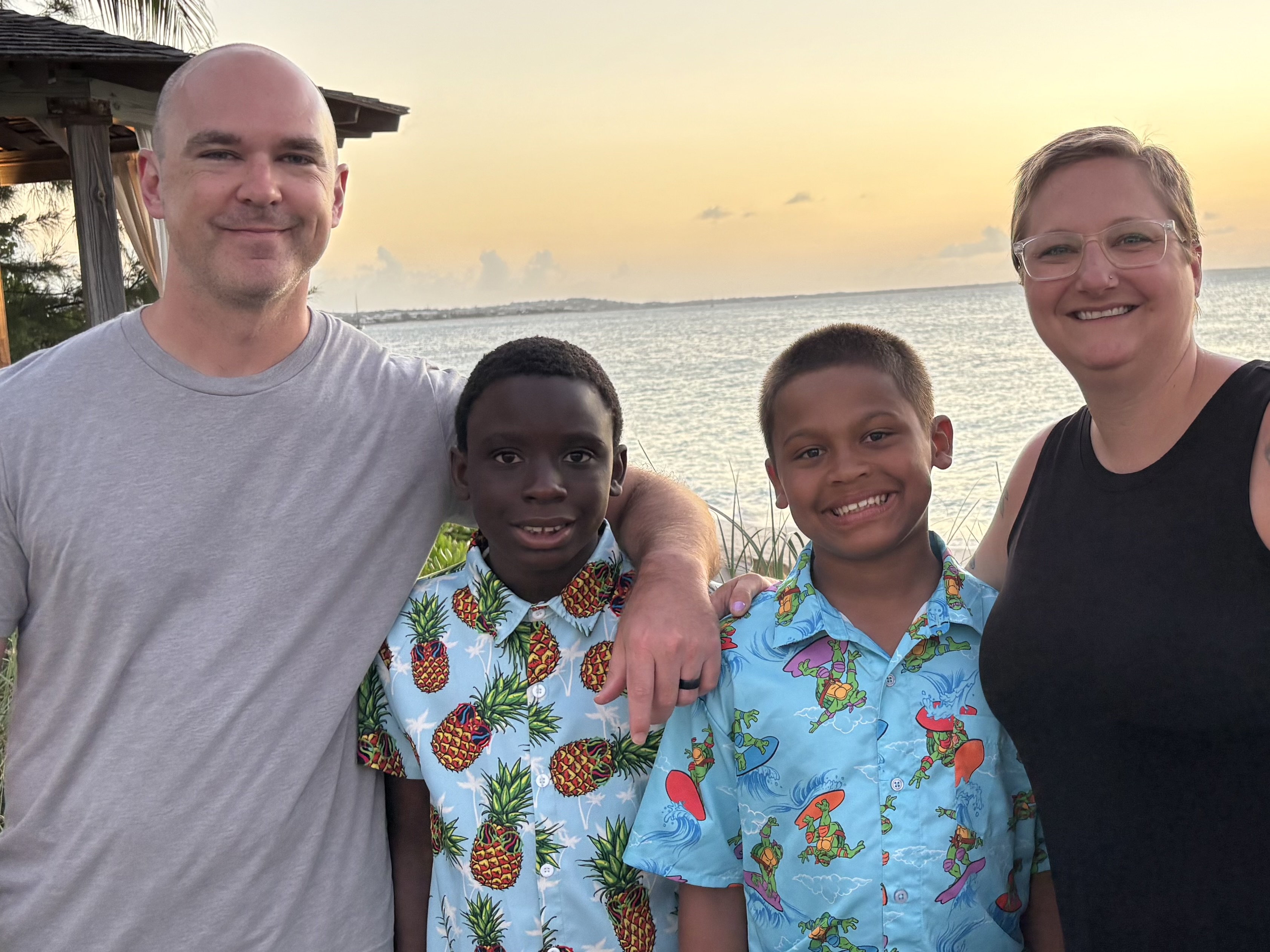 Rebecca Peyton poses with her husband, Rick, and their adopted sons, Zy and Abe. (Courtesy of Lifeline Children's Services)
"I grew up saying I wanted to adopt later in life just because I was adopted, and that's something that I wanted to be able to do as well," Peyton noted. When she and her husband struggled to conceive, their next step was clear.
"Adoption was just the natural path that we felt we were supposed to be on," she said.
That realization led Peyton and her husband back to the ministry where it all began. They adopted their son, Abe, now 12, through Lifeline in 2013, making him the nonprofit's 1,000th adopted child. The Peytons also have another son, Zy, 11, whom they adopted from foster care. Though not blood-related, Peyton said she and her husband are certain the boys were always meant to be part of their family.
"God always knows our future; he knows all of our steps," she said. "I always said I would do adoption, but we would try to conceive first, maybe have our own children. Looking back, those were God's steps for us. Adoption was supposed to be our choice."
(RELATED: Pro-Life Champions: Louisiana AG Lawsuit Could End 'Plan C' Abortion Crime Wave)
Informed Choice
Women facing crisis pregnancies are often expected to choose from one of two options: raising the child or killing it with an abortion. The third choice, adoption, is rarely discussed or seriously considered.
Only three states—Arizona, Louisiana, and Utah—require abortion seekers to receive detailed information about adoption, according to a national survey of informed consent laws conducted in 2022. While 22 other states require some form of pre-abortion counseling, the adoption information a woman may receive—if she receives any at all—could comprise a mere list of agencies or a single sentence informing her that adoption is an option.
This widespread lack of adequate counseling is often downplayed and dismissed by the abortion industry, which benefits when women make quick, desperate decisions out of fear. For example, the Guttmacher Institute—initially founded as a branch of Planned Parenthood—argues that pre-abortion counseling is "medically unnecessary" and may undermine informed consent by providing women with information "meant to promote childbirth."
Unsurprisingly, Guttmacher does not believe childbirth is preferable to killing a defenseless child. Sadly, many women seem to agree, choosing abortion over adoption at a nearly 50:1 ratio—even with overwhelmingly favorable views of private infant adoption.
In fact, where adoption once carried negative connotations due to cases of coercion and forced secrecy, institutional and regulatory changes to the practice have yielded decades of mostly positive public opinion.
"The face of adoption, I think, looks a lot different than it did in the '60s and '70s," said Herbie Newell, Lifeline's president and executive director. "It's much more open; there's much more opportunity for the mom to stay connected to be able to see how her child is doing."
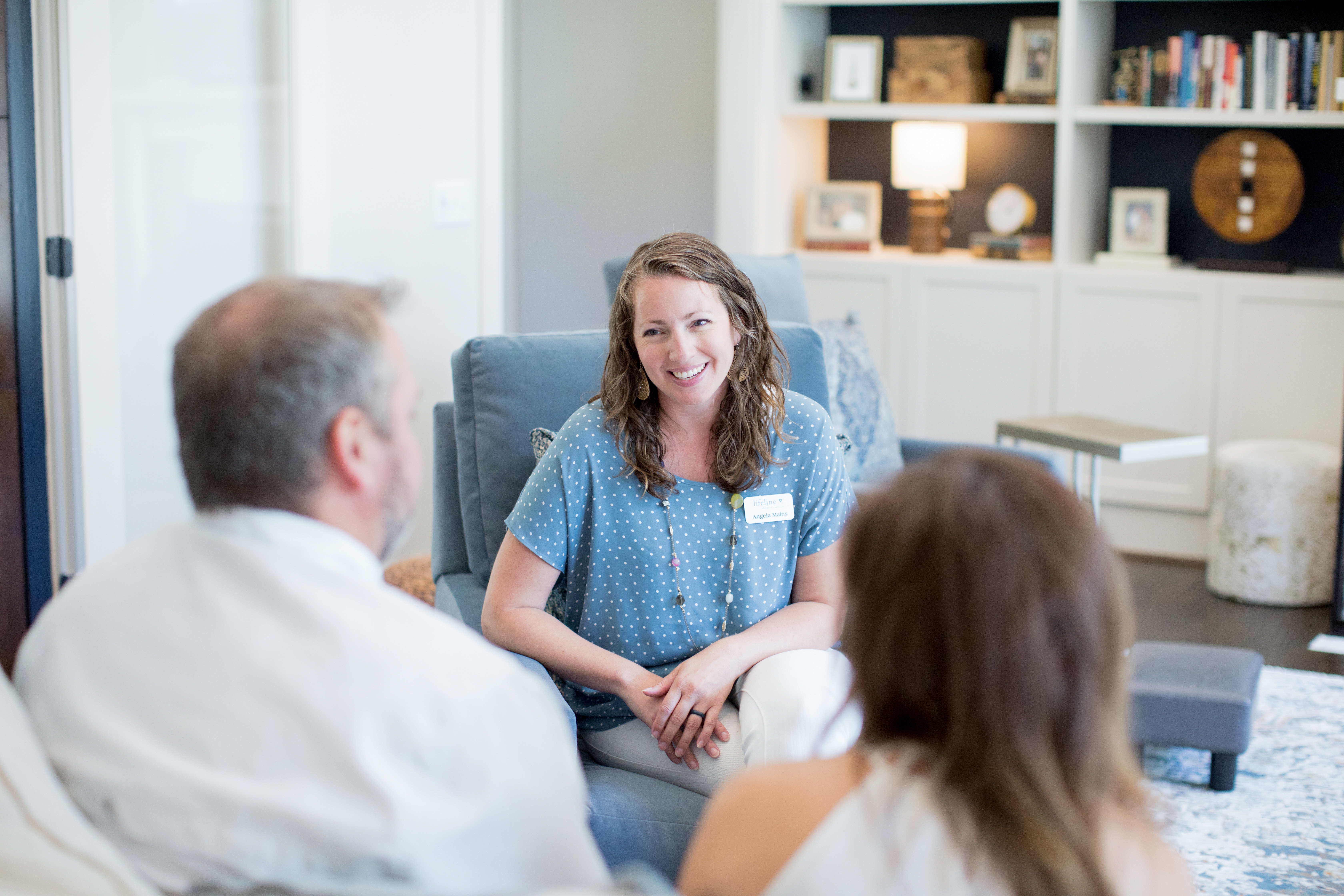 A Lifeline Children's Services staff member counsels a couple exploring adoption. (Courtesy of Lifeline Children's Services)
Still, as the statistics show, a generally favorable view of adoption does not necessarily translate to choosing that path for one's own child.
The reasons for that discrepancy are complex. Carrying a child to term just to place it with another family can be difficult for a mother to imagine. And misconceptions conflating private adoption with foster care may confuse women into thinking their baby will end up in the child welfare system, which is oriented toward family reunification, not adoption.
More than anything, Newell blames the abortion industry's messaging. "I think the culture of death has definitely gotten us to a point where we don't understand the beauty of life in the womb."
Neither a newborn baby nor even a toddler is viable on their own, he noted. Both need the love and care of a parent to sustain their lives.
He further stressed that the possibility that an adopted child may face difficulties in life—as all people do—is not a justifiable reason to end that child's life. "We don't know what tomorrow will hold for any child."
As for Peyton, her advice to mothers facing crisis pregnancies is to thoroughly consider all options before making a final decision.
"There are plenty of resources if someone wants to parent, but that's not always possible," she said. "If it's not possible, abortion doesn't have to be that choice. Adoption can be a beautiful picture of bringing a child into someone else's family . . . [while] allowing the birth mother to have some aspect of that child's life, as well. And it can just overall be a beautiful picture of the gospel."
(READ MORE: Inside the Abortion Pill War Rocking America)